


Poti TechnoWave 2026 – Technology Camp to Learn About Technological Trends and Develop Practical Digital Skills

The second environmental monitoring field visit was carried out in Poti
31 August 2026
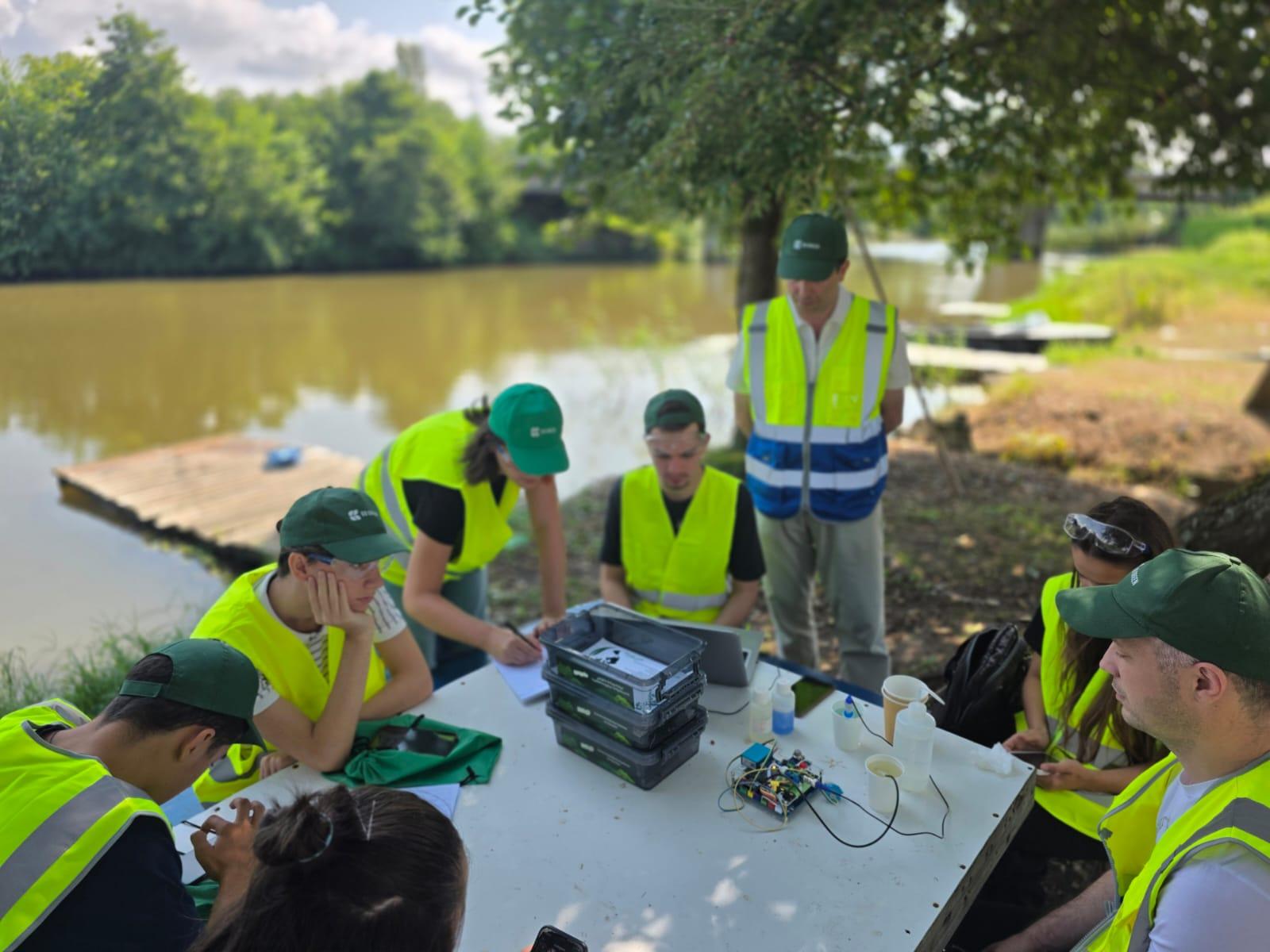
Volunteers from the Poti Citizen Science Program conducted environmental observations using the EcoLab educational sensor kit for the second time.
On August 31, the second field visit for environmental monitoring was held in Poti within the framework of the “Digital Engagement of Citizens for Green Transformation” project.
Poti Citizen Science Program volunteer students and teachers conducted environmental monitoring for the second time using the EcoLab educational sensor kit and recorded the data obtained through the sensors.
Depending on the number of participants, the fieldwork was carried out in two parts and four groups. Locations with different types of environments in Poti municipality were selected for monitoring:
-
Okros Tba, Maltakva — the area of the White Bridge;
-
Kaparchina River — the area near to the Guria Street Bridge;
-
Poti Central Park;
-
The road point to the Poti Port / the transport zone leading to the port;
-
The Black Sea point — the area near to the Poti Lighthouse.
The first part of fieldwork was conducted in the morningtime: The first group visited the Golden Lake, and the second group - the Kaparchina River. The second part worked in afternoon - the third group monitored the environment in the Poti Central Park, and the forth group - the environment in the transport zone near to the Poti Port. III and IV groups also monitored the environment on the Black Sea coast, nearby of the Poti Lighthouse.
In accordance with the specifics of the selected locations, the participants observed and measured various water and air indicators, as well as noise and lighting levels. The data obtained within the framework of the fieldwork were recorded and will be used at the next stage for analysis and comparison of the obtained results.
The second field visit of environmental monitoring was carried out under the leadership of the head of the project’s civil science direction, Giorgi Gambashidze, and with the participation of volunteer teachers from Poti Public Schools Nos. 2 and 12, Shalva Sardalashvili and Luka Tsomaia. Fieldwork was carried out in compliance with the relevant rules for the safety of students.
The project organization team provided transportation for participants between environmental monitoring locations, as well as the EcoLab sensors, equipment, and safety equipment required for fieldwork.
This activity was the field stage of the second cycle of environmental monitoring. Each monitoring cycle includes two main stages: in the first stage, participants conduct environmental observations in the field and collect data using EcoLab sensors, and in the second stage, they process and analyze the results obtained, prepare reports and visual materials in order to share the information received with their schools and local communities.
The second field visit gave participants the opportunity to deepen the practical experience gained during the first monitoring, once again use EcoLab sensors in a real environment, and gradually collect observation results at various selected locations in Poti.
In the next stage, participants will analyze the collected data and prepare relevant materials. The results of environmental monitoring and the information prepared will also be published on the GoGreen web portal to make it accessible to the general public.
Keep an eye on the GoGreen web platform and Facebook page — in the near future, we will share with you the environmental monitoring reports prepared by our participants, as well as presentations and other activities through which they will share the acquired knowledge and experience with their schools and communities.
Along with developing practical environmental monitoring skills, the program also helps participants develop skills in working with data, analyzing results, visualizing them, and presenting them to an audience.
🔬 Important clarification: Environmental monitoring field visits are conducted for educational and cognitive purposes, while EcoLab is a set of educational sensors. Accordingly, the data obtained by sensors within the framework of the program are used to develop practical skills in observing the environment, working with data, and comparing indicators obtained at different times and locations. The data do not represent the results of professional or official environmental monitoring and their use for making official conclusions about the state of the environment without additional verification by appropriate professional methods is not appropriate.
🤝 The project is implemented by the organization Idea Design Group within the framework of the United Nations Development Program (UNDP) "Green Future, Rights and Stability" project, which is funded by the Government of Denmark.
News
-
29/8
-
29/8
About the second field visit to monitor the environment in Khobi
Volunteers from the Citizen Science Program have conducted environmental observations using the EcoLab educational sensors.